

Screened-In Porch vs. Sunroom vs. Patio Enclosure: What's the Difference?
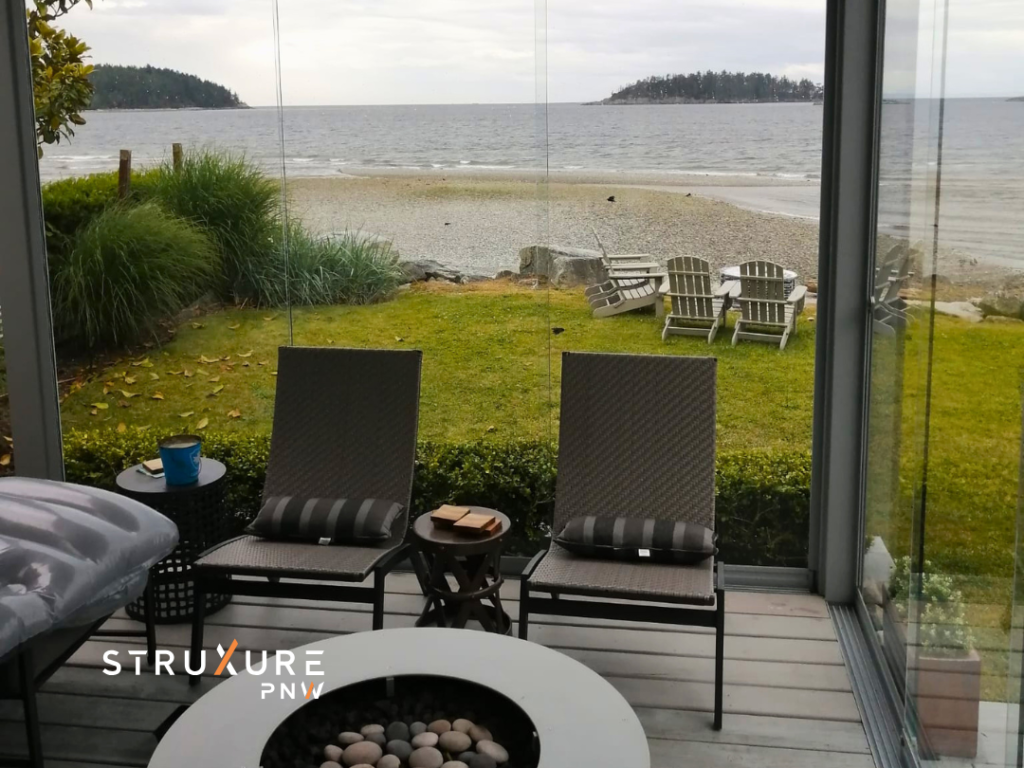
A Classic PNW Dilema
It’s morning on the first day of a long weekend. The house is quiet and you’re wandering around the kitchen making your favorite beverage. You suddenly get the urge to enjoy your drink outside before you get started with the chaos of the day. But then, reality hits you; the bugs have been intense lately and do those clouds look like rain clouds? You decide to give up the dream (a classic PNW dilema). You WANT to be outside, but it’s not worth dealing with the elements.
That’s when you start searching for solutions. But here is where the confusion begins. Are “screened-in porches“, “sunrooms“, and “patio enclosures” just different names for the same thing? (Spoiler alert: they’re not.)
These three options offer vastly different living experiences, budgets, and construction requirements. Choosing the wrong one could mean spending $50,000 on a space you only use two months out of the year. There’s no one-size solution, however. The right choice depends entirely on your climate, your budget, and how you plan to use the space (3-season vs. 4-season).
In this guide, we will break down the structural differences, costs, and best uses for screened-in porches, sunrooms, and patio enclosures to help you decide which investment is right for your home.
As a trusted provider of outdoor oases in the PNW, we offer solutions across all three categories to help you extend your living space seamlessly. But, the focus of this post is 100% education, so let’s dive in!
What is a Sunroom?
A sunroom (often called a “four-season room” is a permanent addition to your home’s main structure. Unlike a simple porch, a true sunroom typically features glass walls, a solid roof, and HVAC integration (heating and cooling tied to your home’s existing system). It’s built on a proper foundation with footings, insulation, and climate control making it a true extension of your indoor living space.
Sunroom Ideas
Looking for design inspiration? Here are three popular ways homeowners use their sunrooms:
- The Four-Season Retreat: Using energy-efficient, low-E glass and full wall insulation, this setup stays warm in January and cool in July. Add a gas fireplace and heated floors for ultimate luxury.
- The Garden Room: Flooded with natural light, this sunroom opens directly to the backyard. Use floor-to-ceiling glass to blur the line between indoors and outdoors, and fill the space with potted plants and natural stone tile.
- The Transitional Space: Not quite a living room, not quite a dining room… it’s both. A transitional sunroom works perfectly as an everyday breakfast nook that feels like you’re dining al fresco, minus the weather.
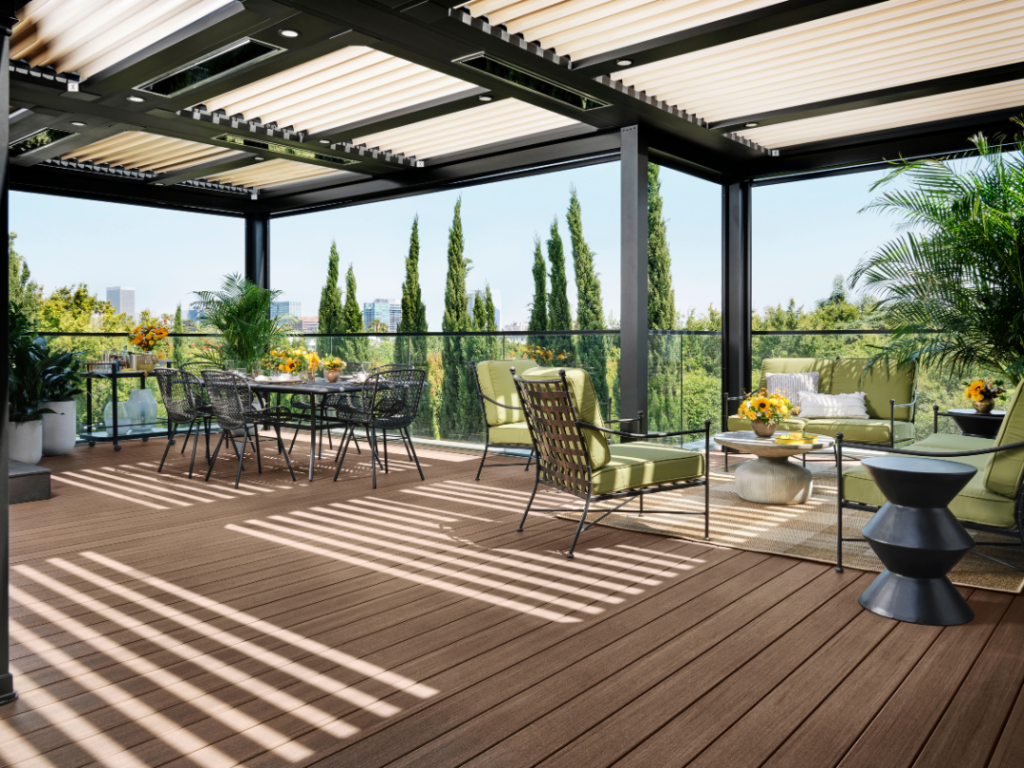
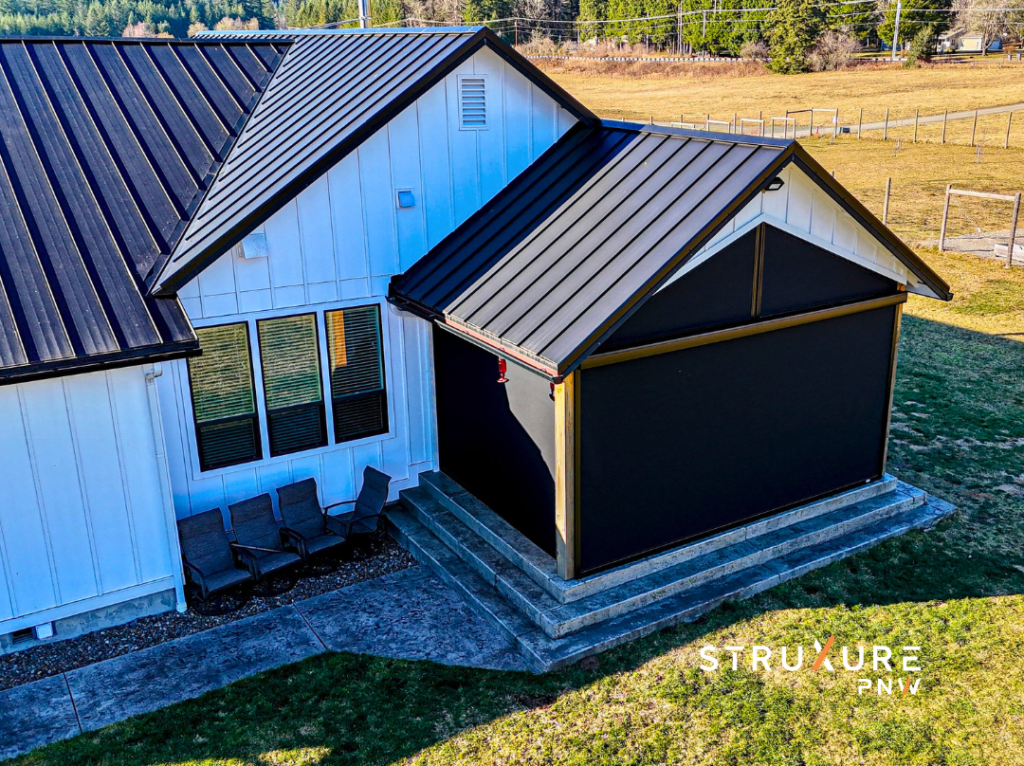
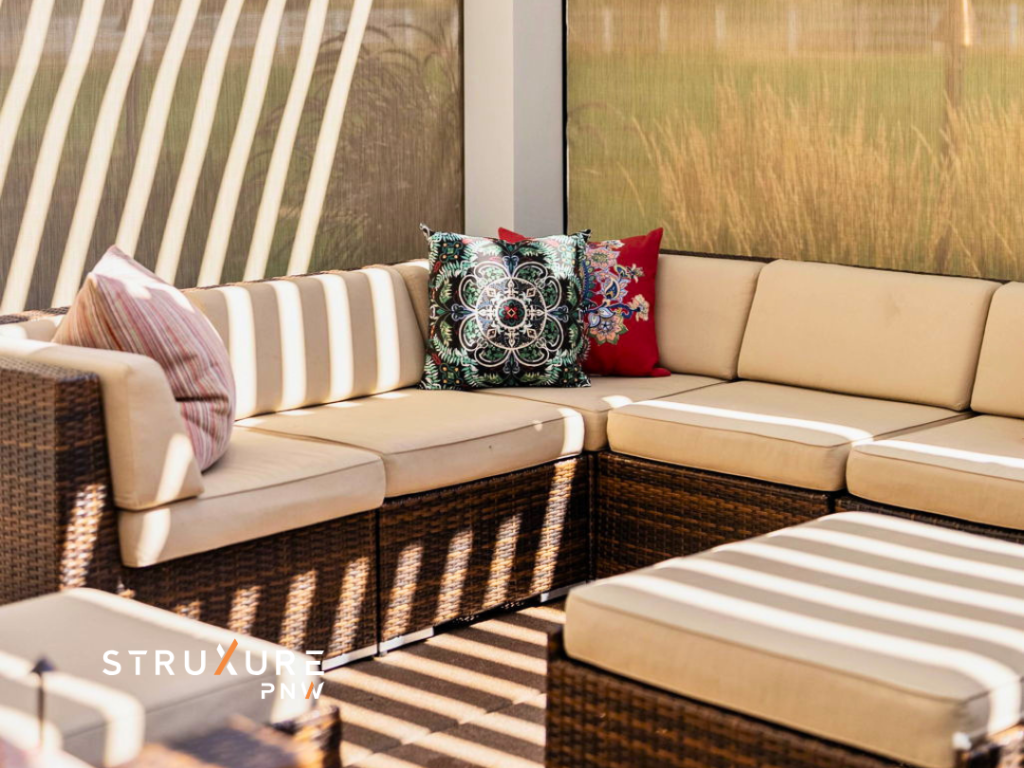
Building a Sunroom: Construction & Materials
Here is where sunrooms differ dramatically from the other options. Because a sunroom adds conditioned square footage to your home, you will need:
- Footings and a frost-proof foundation (not just a concrete slab)
- Permits and architectural plans (your local building department will be involved)
- Climate control (extending HVAC ducts or installing a mini-split system)
- Insulated glass and walls (to meet energy code)
Sunroom Pros and Cons: Is a Four-Season Room Worth the Investment?
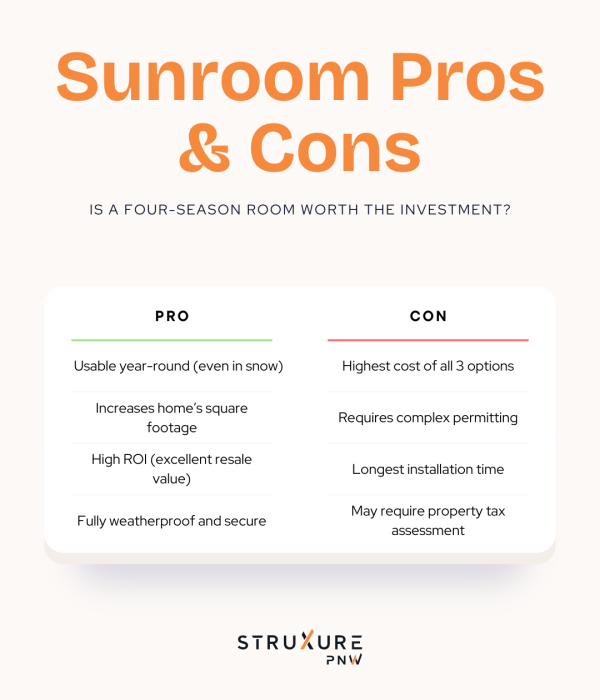
Sunroom Pros
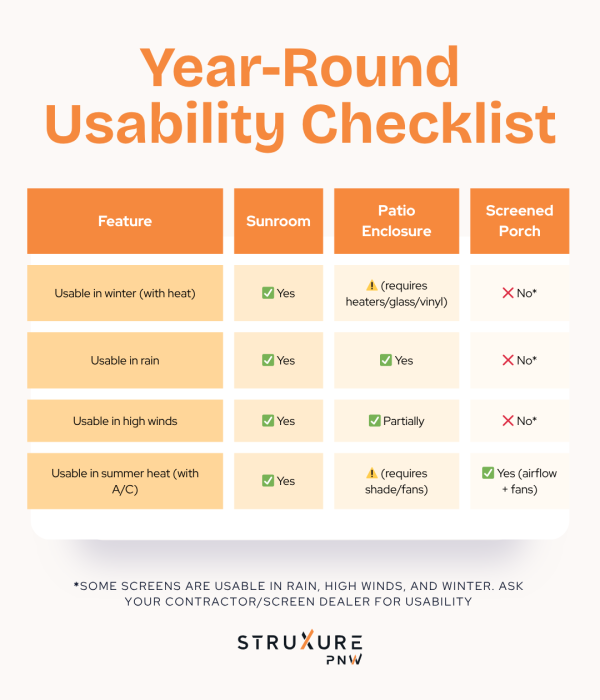
- Usable year-round (even in snow)
- Increases home’s official square footage
- High ROI (excellent resale value)
- Fully weatherproof and secure
Sunroom Cons
- Highest cost of all three options
- Requires complex permitting and wait times
- Longest installation time
- May require property tax assessment
What is a Screened-In Porch?
A screened-in porch is typically an existing patio, deck, or porch that has been enclosed with screens (and only screens). It is not a “conditioned” space (no HVAC), but instead is a hybrid between indoors and outdoors. Think of it as a covered patio with bug protection.
Screened-In Porch Ideas
Looking for design inspiration? Here are three popular ways homeowners use their screened-in porches:
- The Bug-Free Lounge: Perfect for evening relaxation. Add a ceiling fan, outdoor-rated wicker furniture, and string lights. You get the breeze without the bites.
- The Outdoor Dining Pavilion: Keep pests away from your food. A screened dining porch allows you to host summer dinners without constantly swatting at mosquitoes or wasps.
- The Gable Roof Addition: For a more substantial look, use roofing materials that match your existing home. A gable roof over your screen porch adds architectural interest and better rain protection.
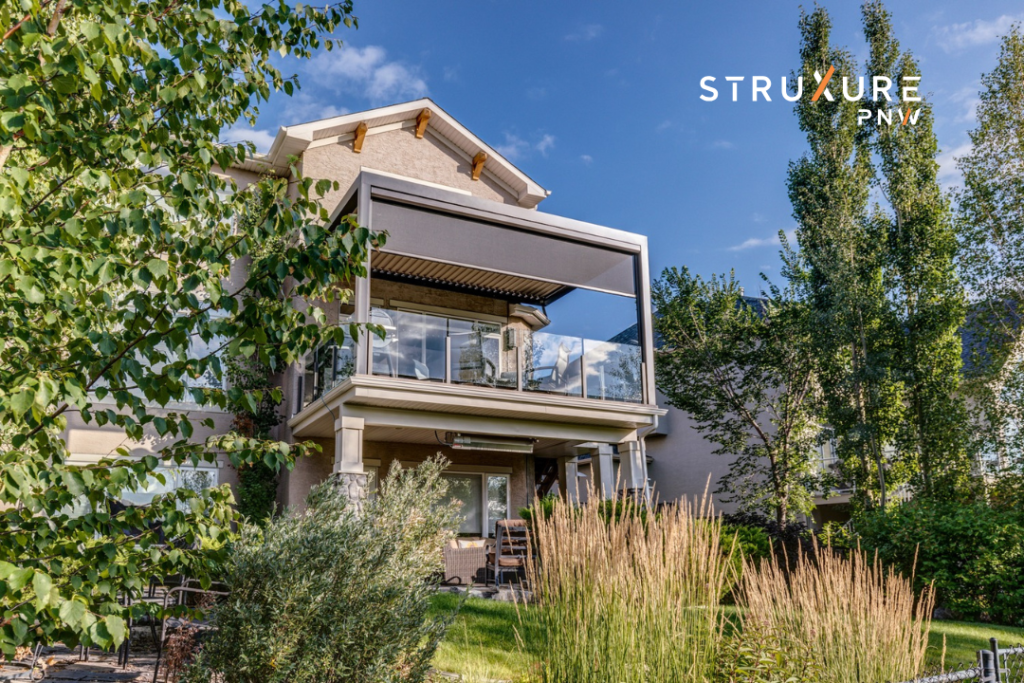
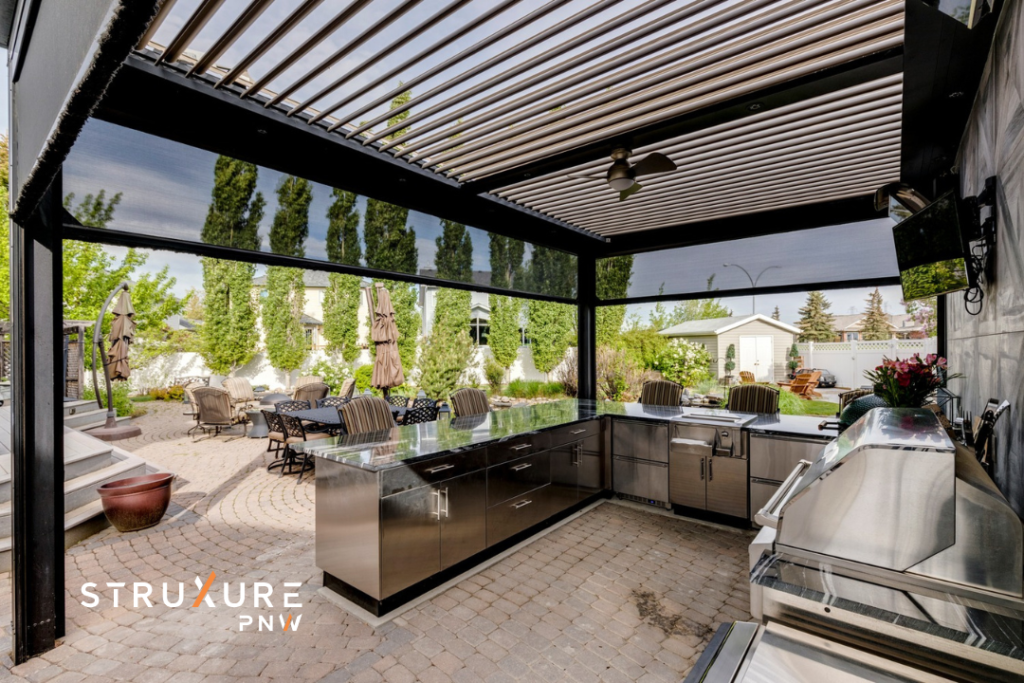
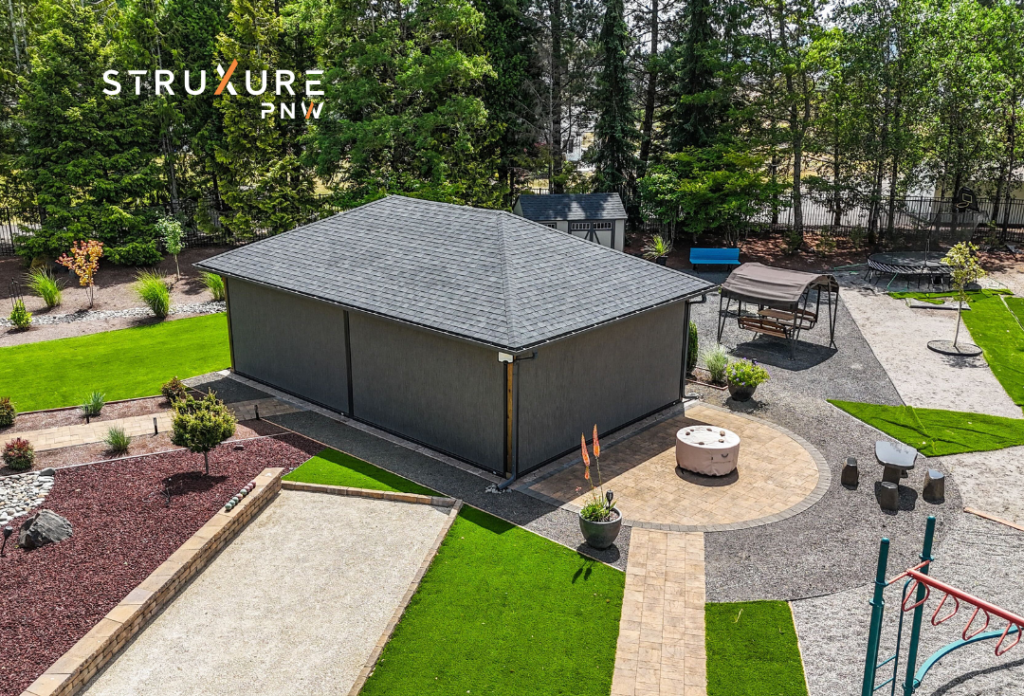
Building a Screened-In Porch: Ventilation & Airflow
The entire point of a screened porch is airflow. Unlike a sunroom (which seals you in) or a glass patio enclosure (which can trap heat), a screened porch relies on natural breezes. To maximize this, avoid clutter and consider adding:
- Multiple screen panels for cross-ventilation (motorized screens make opening and closing a breeze)
- A high-performance screening material (pet-resistant or solar screens)
- A ceiling fan to move air on still days (and push warm air down if you’re using an outdoor heater in the cooler months)
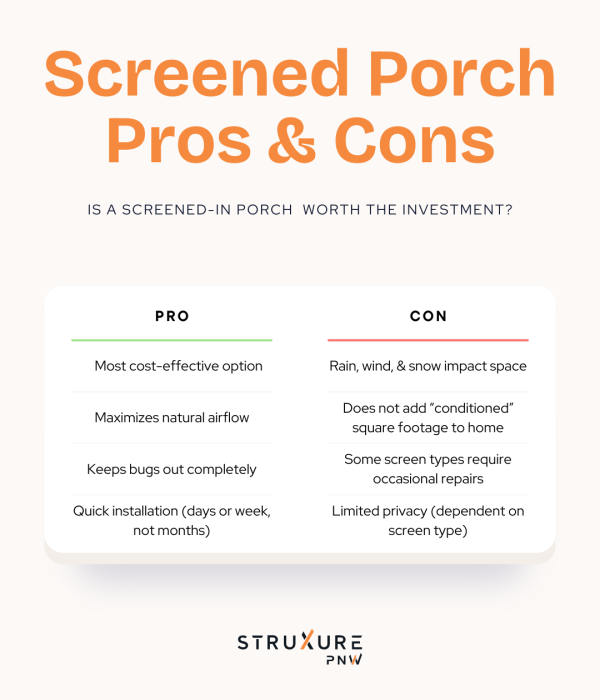
Screened-in Porch Pros
- Most cost-effective option
- Maximizes natural airflow
- Keeps bugs out completely
- Quick installation (days or weeks, not months)
Screened-in Porch Cons
- Rain, wind, and snow may still impact your space
- Does not add “conditioned” square footage to home (no HVAC)
- Some screen types require occasional repairs
- Limited privacy (dependent on screen or enclosure type)
What is a Patio Enclosure?
Here is where people get confused. A patio enclosure is actually the umbrella term for converting an existing patio slab into a livable space. It bridges the gap between a screened porch (inexpensive and airy) and a sunroom (expensive and sealed).
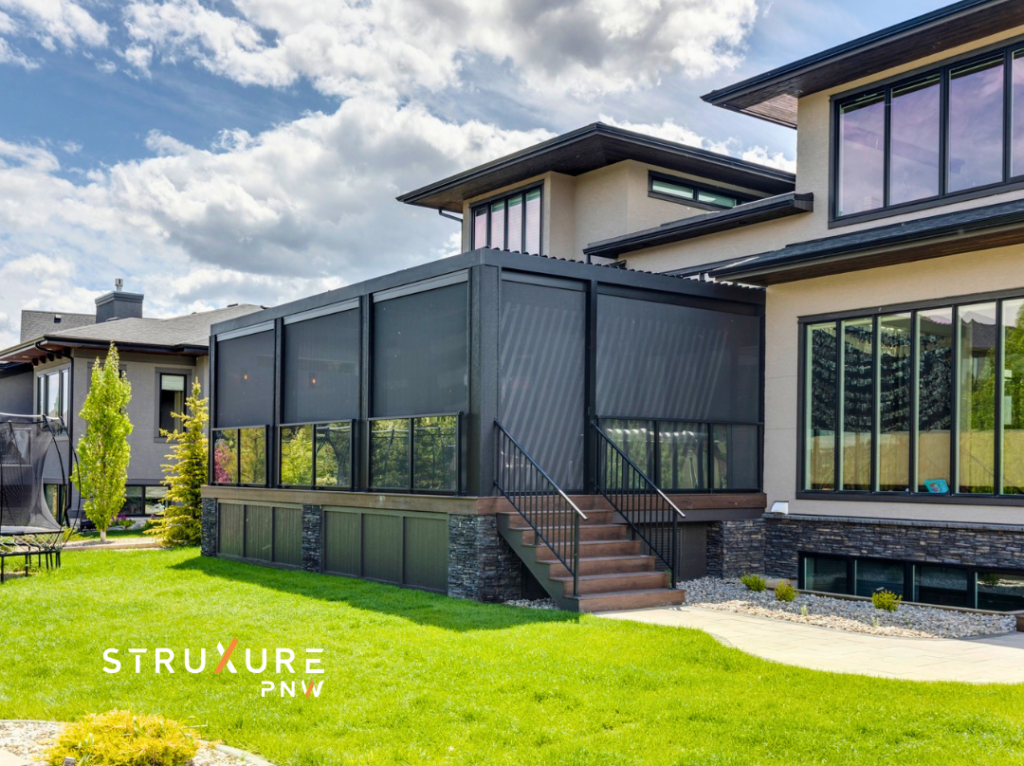
Unlike a sunroom, a patio enclosure rarely requires a full foundation or HVAC tie-in. Unlike a screened porch, it offers solid walls, better screens, or glass partitions for better weather protection. Think of it as the “Goldilocks” option.
The 4 Types of Patio Enclosures
Depending on your budget and climate, you can choose from four distinct styles:
Vinyl Patio Enclosure
- Best for: Affordability and low maintenance.
- Details: Vinyl panels or screens are lightweight, weather-resistant, and never need painting. They offer privacy (opaque or semi-opaque) and block wind better than screens. The downside? Lower-quality vinyl can yellow over time in direct sun.
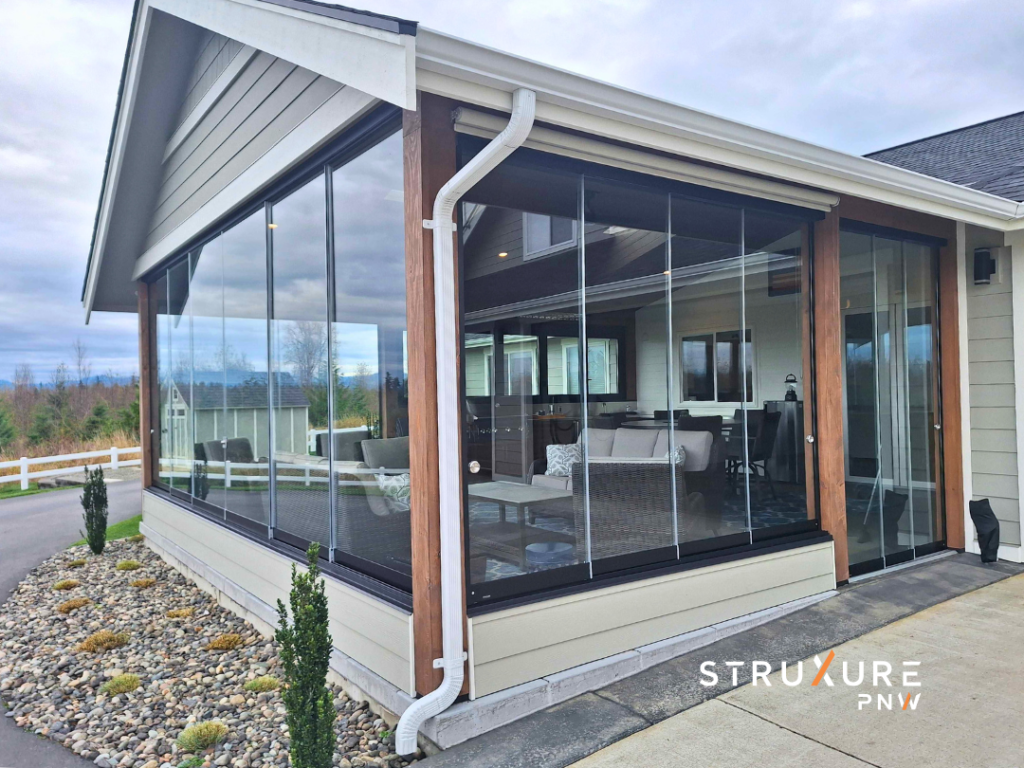
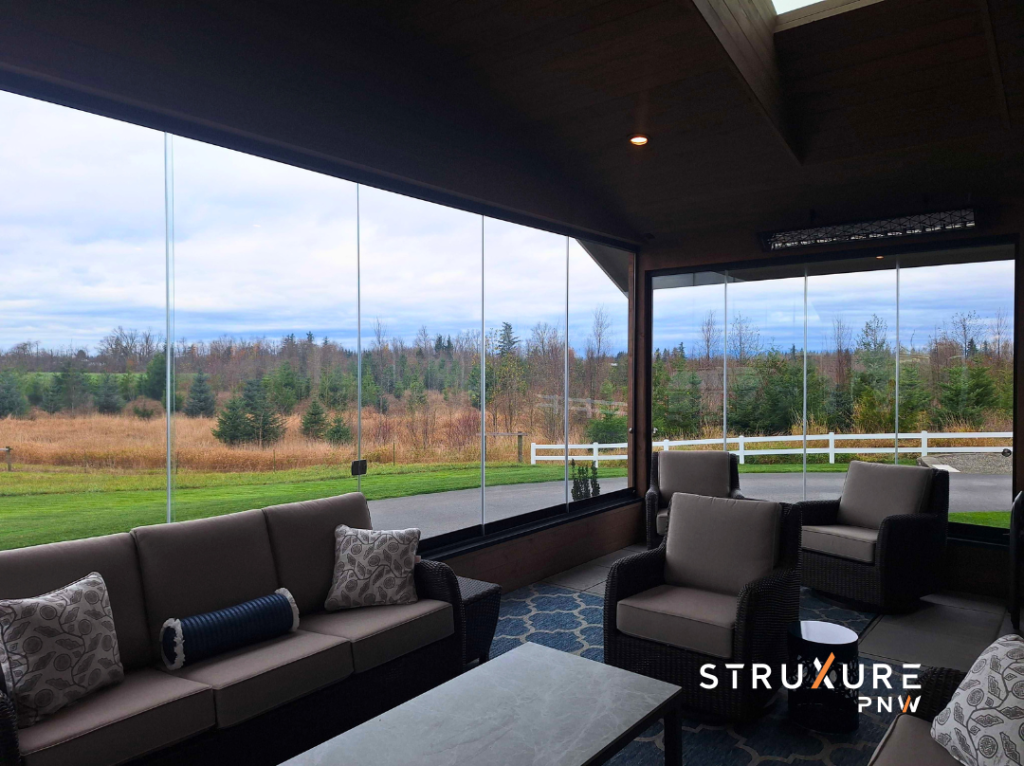
Glass Patio Enclosure
- Best for: Maximizing views and natural light.
- Details: Single-pane glass works for 3-season use (spring through fall). Insulated glass (double-pane) approaches sunroom performance. Glass enclosures feel more “finished” than vinyl but cost more.
Screened Patio Enclosure
- Best for: Breathability and budget.
- Details: The classic aluminum frame with standard screening. This is functionally identical to a screened-in porch but built specifically over a concrete patio slab. It remains the most breathable option.
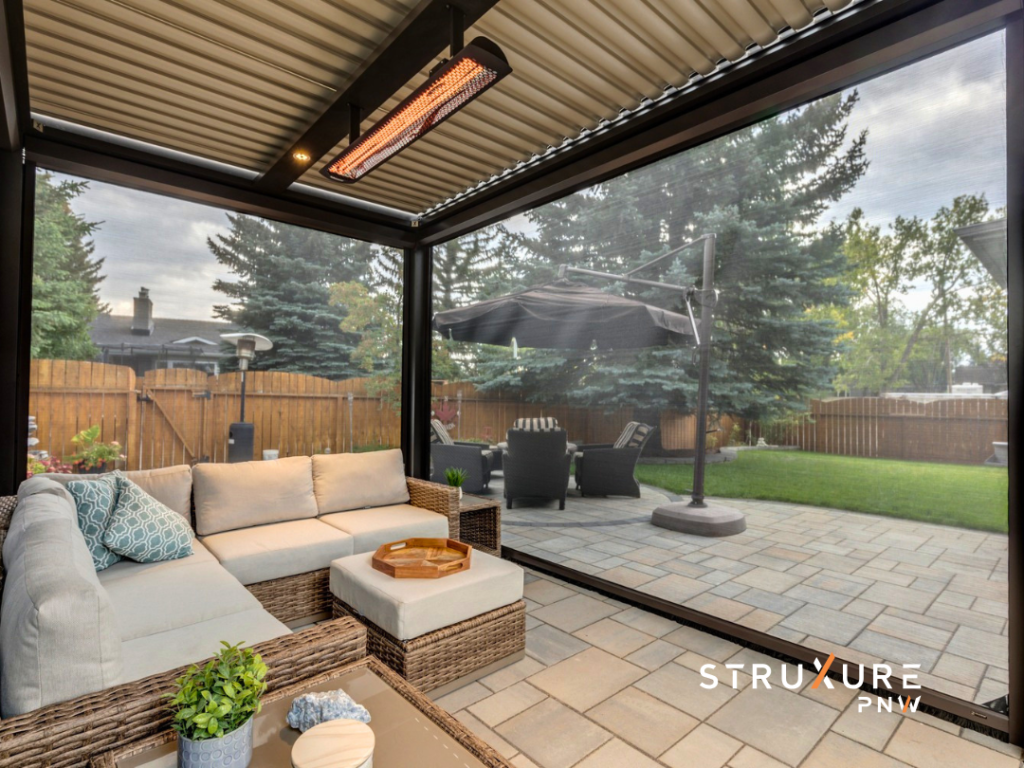
Retractable Patio Enclosure
- Best for: Ultimate flexibility (the premium choice).
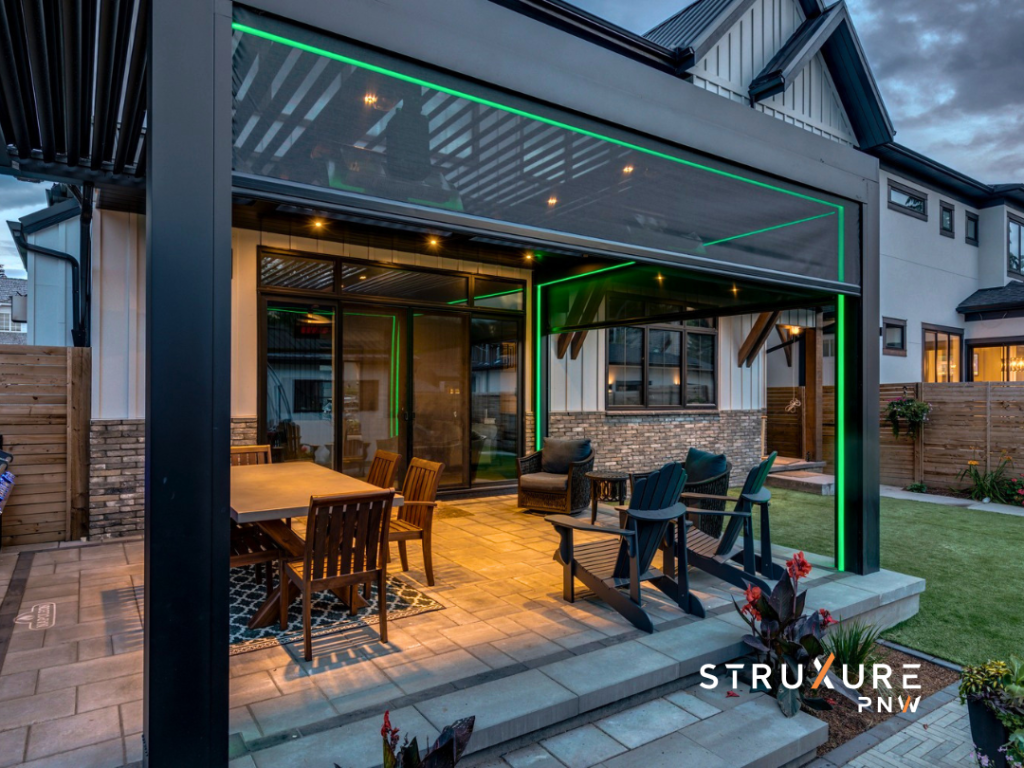
- Details: Motorized screens or glass walls that open completely at the touch of a button. When closed, you have shelter. When open, you have a true open-air patio. Think of it as a pergola that adapts to the weather instantly.
Patio Enclosure Pros
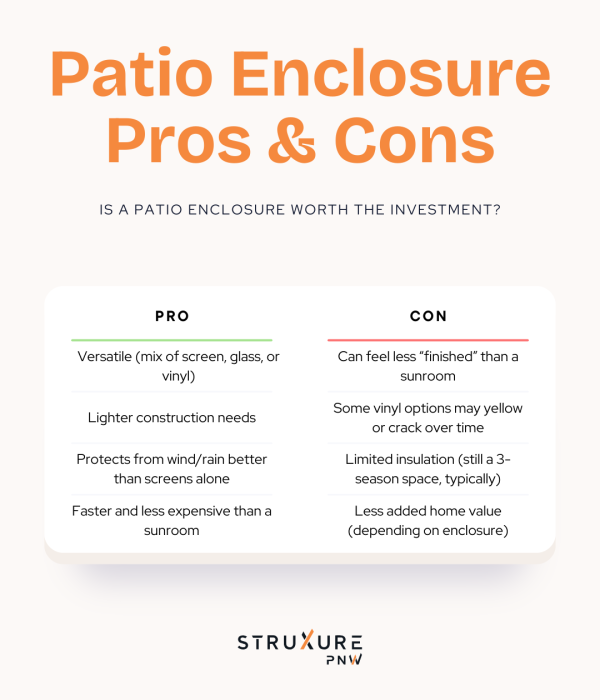
- Versatile (mix of screens, glass, or vinyl)
- Lighter construction (typically)
- Protects from wind/rain better than screens alone
- Faster and less expensive than a full sunroom
Patio Enclosure Cons
- Can feel less “finished” than a sunroom
- Vinyl options may yellow or crack over time
- Limited insulation (still a 3-season space typically)
Head-to-Head Comparison: Key Differences
Let’s settle this once and for all.
Cost Comparison
Year-Round Usability Checklist
Resale Value & Square Footage Comparison
This matters if you ever plan to sell your home.
- Sunroom: Adds “conditioned” square footage. Appraisers count it the same as any other room. This increases your home’s value significantly.
- Patio Enclosure: Adds “non-conditioned” square footage (like a three-season porch). Appraisers value it at 50-75% of interior space.
- Screened Porch: Typically adds zero official square footage. Buyers love it, but appraisers do not count it.
Permitting & Construction Difficulty
This matters if you ever plan to sell your home.
- Sunroom: Architectural plans required. Full building permit. Electrical, HVAC, and structural inspections.
- Patio Enclosures: Often fall under “accessory structure” permits. Faster approval, but check local codes.
- Screened Porch: Easiest permit process (sometimes no permit needed for repairs, only new construction).
How to Choose the Right Option for Your Home
Still unsure? Run through these four scenarios.
- Scenario 1: You live in a region with harsh winters (snow, ice, sub-freezing temps).
Recommendation: Sunroom (with insulated glass and HVAC tie-in). You need a four-season space. - Scenario 2: You have a great view (mountains, lake, forest) but suffer from mosquitoes and flies.
Recommendation: Screened Patio Enclosure or Retractable Patio Enclosure. Keep the view, lose the bugs. - Scenario 3: You want a quiet reading nook or home office but don’t need heat (mild climate).
Recommendation: Glass Patio Enclosure (3-season) or a small, unheated sunroom. - Scenario 4: You are on a strict budget but need shade and bug protection.
- Recommendation: Vinyl Patio Enclosure or Screened Patio Enclosure. Maximum function for minimum cost.
- Scenario 1: You live in a region with harsh winters (snow, ice, sub-freezing temps).
Why Choose StruXure PNW for Your Project
At StruXure PNW, we don’t force you into one category. We specialize in all three, from custom glass partition installations to durable vinyl and motorized screen patio enclosures.
If you choose a screened porch, we offer high-performance screen systems that integrate seamlessly with your space. If you want a retractable enclosure, our motorized louvered pergola systems give you one-touch control over sun, shade, and rain.
We serve the unique climate of the Pacific Northwest, where you need protection from mist and wind just as much as you want summer airflow and sunshine.
Ready to see what’s possible on your existing patio or deck?
Contact us for a complimentary consultation where we’ll assess your space, discuss your budget, and help you determine the most feasible option.
Contact Our Experts for a complimentary consultation.
Frequently Asked Questions
Can I turn my screened porch into a sunroom?
Yes, but it requires adding insulated walls, windows, a proper roof, and HVAC. In many cases, it’s more cost-effective to build a new sunroom than to retrofit an existing screen porch.
Do I need a foundation for a patio enclosure?
Not always. Many patio enclosures can be built directly on an existing concrete slab. However, if your slab is cracked or unlevel, you may need repairs first.
What is the cheapest way to enclose a patio?
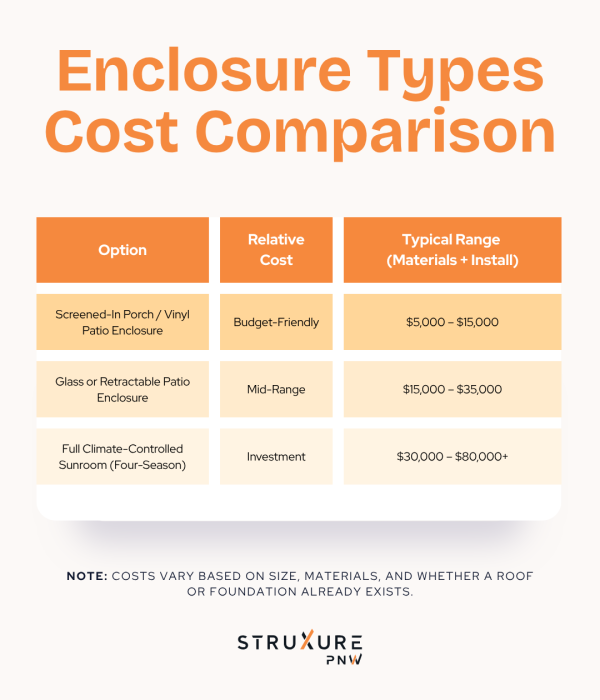
A vinyl patio enclosure or screened patio enclosure is typically the lowest-cost option. Expect to spend $5,000–$10,000 for a basic 12’x12’ space.
Does a sunroom add value to a home?
Yes, especially a four-season sunroom with HVAC. Most homeowners recoup 50-70% of the cost at resale, and it often makes the home sell faster.
Does my project need to be done at once or can I do this in stages?
You can stage it. Start with a roof and screens (patio enclosure). Later, add glass panels or insulation to upgrade toward a sunroom. StruXure PNW can help you design a phased plan.
What’s the best option for the PNW (Pacific Northwest)?
For Washington and Oregon, we recommend a retractable patio enclosure or glass patio enclosure with good rain protection. You need shelter from drizzle but still want airflow during our warm months.
How do I get a quote for my project?
It’s easy. Click here to schedule a call to get more information and set up your complimentary in-home consultation. We’ll measure your space, discuss your goals, and provide a transparent, line-item quote.
Conclusion
Let’s recap. The choice between a screened-in porch, sunroom, and patio enclosure comes down to three things:
- Budget (under $10k? Go screened or vinyl. Over $30k? Consider a sunroom.)
- Climate (harsh winters need a sunroom; mild climates can use a patio enclosure)
- How you intend to use the space (year-round office vs. summer lounge)
Close your eyes and visualize your dream backyard. Are you sipping coffee while snow falls outside warm glass? Or are you feeling a summer breeze without a single mosquito in sight?
Both are possible. One just costs a lot less and takes a lot less time to build.
Ready to transform your outdoor living space? Contact StruXure PNW today to explore our custom solutions for turning your seasonal outdoor space into a year-round space you can enjoy.
Get Your Free Quote Now → Contact Our Experts